 Credit: Lucas Gouveia / Android Police
 By
Ben Khalesi
Published 12 hours ago
By
Ben Khalesi
Published 12 hours ago
Ben Khalesi writes about where artificial intelligence, consumer tech, and everyday technology intersect for Android Police. With a background in AI and Data Science, he’s great at turning geek speak into plain English. When he’s not working, you’ll find him bouldering.
Sign in to your Android Police account Add Us On Summary Generate a summary of this story follow Follow followed Followed Like Like Thread 2 Log in Here is a fact-based summary of the story contents: Try something different: Show me the facts Explain it like I’m 5 Give me a lighthearted recap15GB is a joke in 2026.
We’re living in a time when phones casually pack 200-megapixel cameras and shoot 8K video at 60fps.
A weekend trip can generate 5GB of media without even trying, and Google knows this.
It has watched our high-resolution lives slowly choke the shared storage pool across Drive, Gmail, and Photos.
The strategy is to give us the first taste of convenience for free, wait until we’re too deep to leave, and then start charging us.
Here’s how I broke my data out of the Google ecosystem and built a local vault that does most of what Google Photos does, minus the subscription and AI training.
 Related
5 reasons Google Drive stopped working for my daily storage, and what I replaced it with
Related
5 reasons Google Drive stopped working for my daily storage, and what I replaced it with
I switched from Google Drive to Proton Drive due to privacy and security concerns
Posts By Parth ShahWhen paying for cloud storage makes sense and when it doesn’t
 Credit: Lucas Gouveia / Android Police
The moment you reach the storage cap, your instinct is to click Upgrade. And I’m going to say it, go ahead.
Seriously, for most people — probably the vast majority of you — paying for cloud storage makes total sense.
If you’re already using AI chatbots and aren’t too worried about the privacy side, Google’s AI Pro plan is a good deal.
You’re already paying for AI, you might as well go with Google’s and get 2TB of cloud storage as a bonus.
Building your own backup is more work than you think. Buying the hardware is just the start.
You’ll have to be comfortable with command lines and GitHub repositories, hunting down fixes in forums, and accepting that your system will fail repeatedly, and you’ll always be the one fixing them.
That said, if you’re as stubborn as I am and serious about privacy, keep reading.
What Google doesn’t tell you about Takeout archives
 Credit: Lucas Gouveia / Android Police
If you want to get your photos out of Google Photos, you need to go through Google Takeout. I requested my archive and ended up with a bunch of separate ZIP files.
Then I noticed something annoying.
Google often separates some important metadata, like date and location info, into separate .json files in Takeout, so many photos won’t show the correct dates if you copy the images.
If I moved these files to a hard drive, they’d all show up as being created on the day I downloaded them.
My trip to Japan in 2018 would be mixed in with my recent work screenshots.
To fix this, I used a tool called Metadata Fixer. It scans your Takeout zips, finds the JSON sidecars, and stitches the metadata back into their image files.
The lifetime license costs about $40.
There’s also immich-go, an open source command-line tool written specifically for this problem.
I picked a Mini PC over a NAS for my vault
After I had my data, I needed a place to put it. There are two paths. The easy way or the fun way.
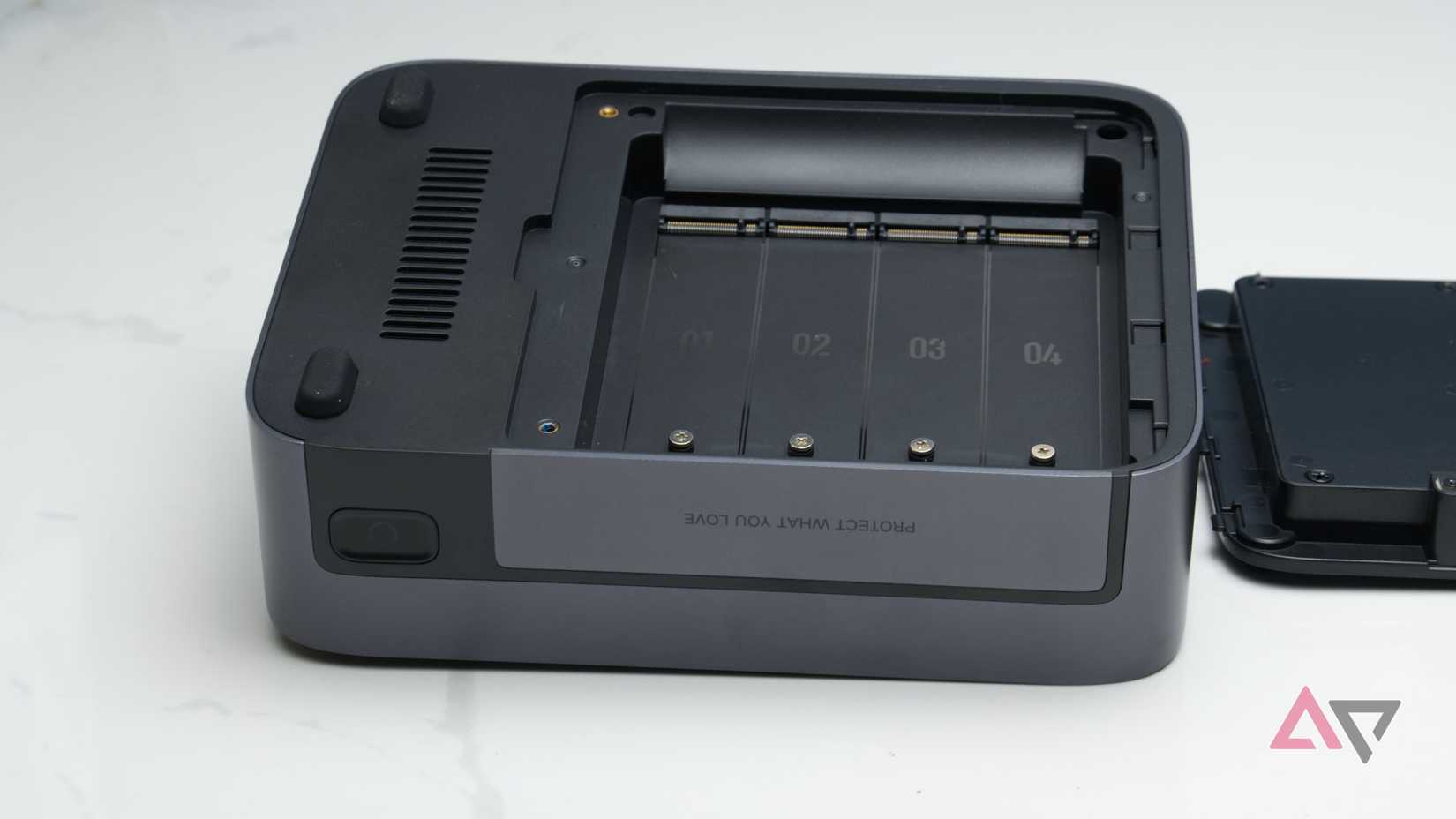
Path A is to buy a NAS. It’s a small computer with a bunch of hard drives that plugs into your router. It’s user-friendly, but you’re paying a premium for it.
Path B is the DIY route. You can pick up a used PC or repurpose an old one. At a minimum, you’ll want 4GB of RAM and at least a 2-core CPU.
I got a used office Mini PC running the Intel N100, added a 2TB external hard drive, and plugged it into my router. These are the darlings of the self-hosting community right now.
The Intel N100 is strong enough to run light-weight machine learning models, letting you do object detection and search through your photos locally.
The software stack that replaced Google Photos
 Credit: Lucas Gouveia / Android Police | Kaspars Grinvalds / Shutterstock
If I were going to replace Google Photos, I would need that Google magic. Face recognition, map view, memories, and being able to type “beach” and get beach photos.
I landed on Immich.
It’s an open source photo management system that looks and feels a lot like Google Photos, complete with iOS and Android apps and automatic backups when you connect to your home Wi-Fi.
Immich isn’t a standard Windows program you install with an .exe. It runs inside a self-contained package of code originally built for Linux.
Subscribe for hands-on DIY cloud storage guidance
Join the newsletter for practical coverage of cloud storage, privacy trade-offs, and self-hosting. Subscribe for focused tool picks, setup tips, and troubleshooting help to build and maintain a private local photo vault and keep control of your images. Subscribe By subscribing, you agree to receive newsletter and marketing emails, and accept Valnet’s Terms of Use and Privacy Policy. You can unsubscribe anytime.You can install Linux directly or, if you want to stay on Windows, use Docker Desktop, which acts as a bridge between your operating system and the app.
However, Immich’s support for setup or troubleshooting on non-Linux OSes is limited. This XDA guide explains the process really well.
I didn’t want to mess with router settings or port forwarding. So I installed Tailscale on both the PC and my phone for a tunnel between devices.
The freedom of owning your data
Yes. It’s a bit pricey upfront, but it’s mine to keep, scalable, and worth way more long term. Most importantly, it’s private.
And I proved to myself I didn’t need a trillion-dollar company to manage my files. I’ve got this, and that was the goal all along.
If you’re seeing that “Storage Full” notification today, take it as a sign.
Audit your storage, check what you’re paying, and ask yourself if you’re comfortable with your photos potentially being used as training data.
If the answer is no, and you have the skills, build your own Vault.
-
 Applications
 Google Keep is the most underrated focus app on Android — here's how I use it to stay organized
 Why I stopped relying on Google Maps in Android Auto — and the app I use now
 NotebookLM’s most needed feature just finished rolling out